Teach Kids Safe Cat Handling With a Printable Cheat Sheet
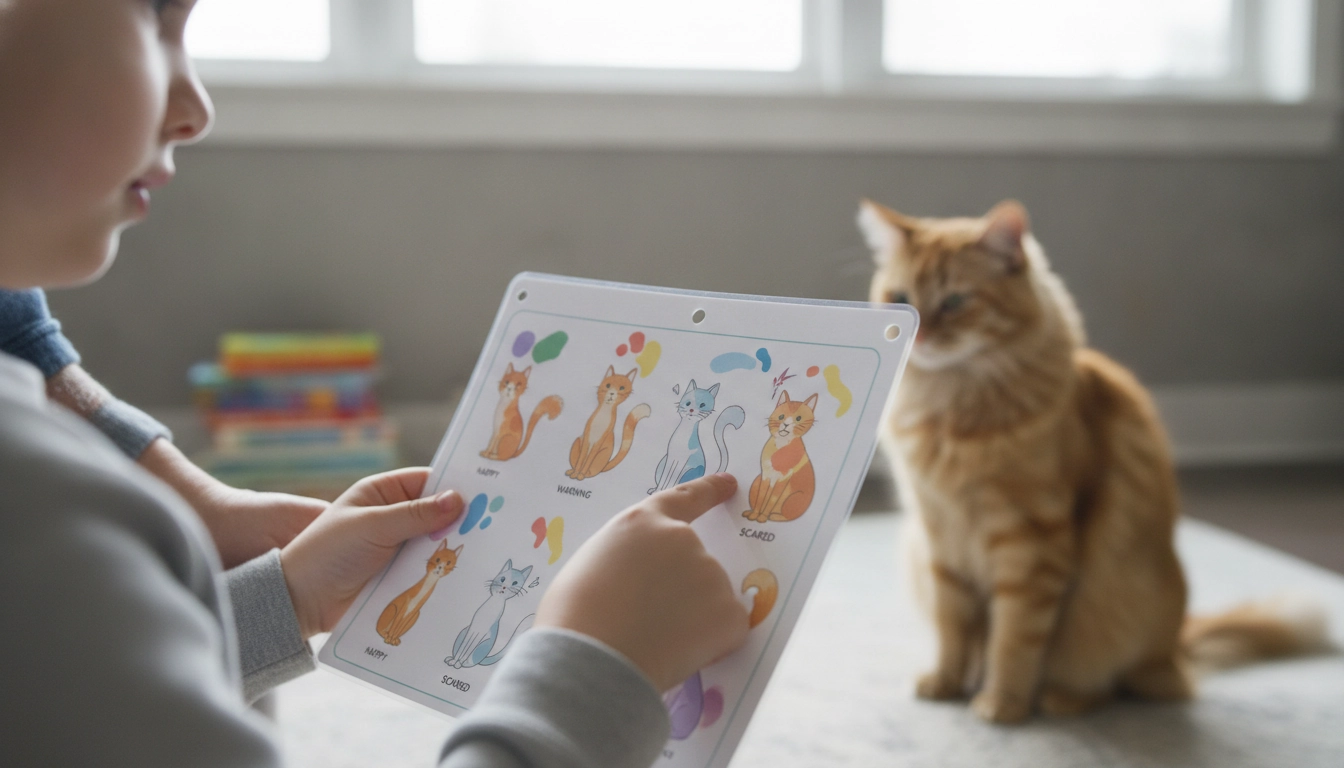
How can a printable cat body language cheat sheet be used to teach kids safe cat handling?
A printable cat body language cheat sheet turns “guessing” how a cat feels into a simple, repeatable safety routine kids can follow. Post the sheet where your child meets the cat most often (living room wall, fridge, or near the cat’s favorite spot), then use it as a quick check before any touching happens.
Turn it into a 3-step “Look, Ask, Touch” rule
1) Look: Have kids match what they see to the sheet: ears, tail, eyes, posture, and whiskers. If they spot “back off” signals (flattened ears, twitching tail, stiff body, wide eyes), the rule is hands off and give space.
2) Ask: Kids say out loud what the cat is “telling” them (“Tail is swishing, ears are sideways—cat needs a break”). Speaking the observation slows them down and prevents sudden grabbing or chasing.
3) Touch (only if the sheet says it’s okay): If the sheet shows relaxed signals (soft eyes, neutral tail, forward ears, loose body), kids can use one gentle pet on the shoulder or cheek area, then pause and re-check. Short, respectful interactions reduce scratches and keep the cat comfortable.
Make handling rules visual and consistent
Use the cheat sheet to teach clear boundaries: no hugging, no face-to-face hovering, no tail pulling, and no picking up unless an adult says it’s safe. Pair the sheet with a “consent test”: pet once, then stop. If the cat leans in or stays relaxed, continue; if the cat turns away, tenses up, or flicks the tail, end the interaction.
Practice with real-life “cat moments”
When the cat is eating, hiding, or sleeping, point to the cheat sheet and label it as “do not disturb.” When the cat is playful, show kids how overexcitement can escalate—fast tail swishes or sudden ear changes mean it’s time to switch to a toy on a wand instead of hands.
For a fuller breakdown of common signals (tails, ears, meows) and what they mean, see the guide here: cat body language cheat sheet signals.
FAQ
What are the easiest cat “stop” signals for kids to remember?
Flattened or sideways ears, a stiff body, and a fast-twitching or whipping tail are the simplest red flags. Teach kids to freeze, step back, and give the cat space when they see any of these.












Leave a comment